
How Sandblasting Improves Metal Surface Performance
May 10, 2026 3:37 pm Leave your thoughtsMetal surfaces endure a lot. From rust and corrosion to stubborn coatings and mill scale, the challenges that affect metal performance are numerous and persistent. Whether you are working with structural steel, automotive components, or industrial machinery, the condition of the metal surface directly impacts how well it performs and how long it lasts. That is where abrasive blasting services come into play. By using high-velocity abrasive materials to clean and prepare metal surfaces, sandblasting has become one of the most reliable and widely used methods in metal surface treatment across industries worldwide.
Understanding how sandblasting works and why it matters can help property owners, contractors, and manufacturers make better decisions about maintenance, fabrication, and protective coating applications. The benefits go far beyond simple cleaning. Sandblasting fundamentally transforms the surface at a microscopic level, improving adhesion, eliminating contaminants, and extending the life of whatever protective finish is applied afterward.
The Science Behind Sandblasting and Metal Surface Treatment
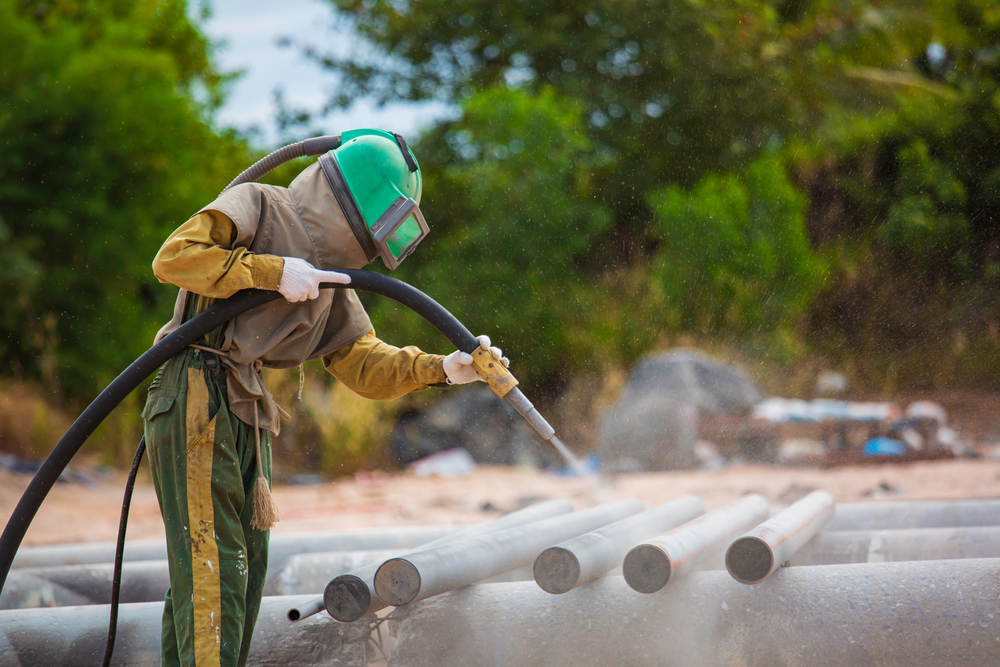
To appreciate what sandblasting does for metal, it helps to understand the process itself. Sandblasting, more broadly known as abrasive blasting, involves propelling fine particles at high speed against a metal surface. The force of impact removes rust, paint, scale, and other contaminants while simultaneously creating a roughened texture known as a surface profile.
This surface profile is not just a byproduct of the cleaning process. It is one of the most important outcomes of metal surface treatment. Coatings such as paint, primer, and epoxy require mechanical adhesion to bond properly to metal. A smooth surface offers very little for coatings to grip, which is why factory-fresh or previously painted metals often experience peeling and flaking over time. The microscopic peaks and valleys created by abrasive blasting services give coatings a much larger surface area to bond with, resulting in stronger adhesion and longer-lasting protection.
Different abrasive materials are selected based on the desired surface profile and the specific application. Steel shot, aluminum oxide, glass beads, and crushed walnut shells each create different results. Professionals in the abrasive blasting industry choose their media carefully to match the requirements of the project, whether the goal is aggressive cleaning, fine finishing, or something in between.
How Sandblasting Removes Corrosion and Contaminants
One of the most common reasons for choosing sandblasting as a metal surface treatment is the need to remove rust and corrosion. Metal that has been exposed to moisture, salt, or harsh chemicals will develop oxidation over time. Left untreated, that corrosion weakens the structural integrity of the metal and shortens its lifespan significantly.
Abrasive blasting services are uniquely effective at tackling rust because the abrasive particles do not just clean the surface visually. They physically remove the oxidized layer down to the bare, clean metal underneath. This is important because rust has a tendency to continue spreading beneath coatings if it is not fully eliminated before painting or sealing. Chemical treatments can neutralize rust, but they rarely remove it as thoroughly as mechanical abrasion.
In industrial settings, metal components are also frequently contaminated with oil, grease, mill scale, and weld slag. These substances interfere with coating adhesion and can compromise the performance of the final product. Sandblasting removes all of these residues in a single pass, preparing the surface more efficiently than hand grinding or chemical washing alone. For facilities that rely on high-performance coatings to protect equipment from heat, chemicals, or abrasion, this thorough surface preparation is not optional. It is essential.
Improving Coating Adhesion Through Proper Surface Preparation
The relationship between surface preparation and coating performance is well established in the coatings industry. Studies and field data consistently show that the majority of premature coating failures can be traced back to inadequate surface preparation rather than problems with the coating material itself. This is why professional abrasive blasting services are considered a foundational step in any serious metal surface treatment program.
When a coating is applied to a poorly prepared surface, it sits on top of contaminants, loose particles, or an insufficiently rough profile. Over time, moisture can infiltrate the bond line and cause blistering or delamination. In corrosive environments such as marine, chemical processing, or outdoor infrastructure applications, this failure can happen surprisingly quickly and result in costly repairs or premature replacement.
Sandblasting addresses this problem by delivering a clean, profiled surface that maximizes coating adhesion. Many industrial coating systems specify a minimum surface profile measured in mils or microns, and abrasive blasting is often the only practical way to achieve that profile consistently across large surface areas. When coatings bond correctly to a properly blasted surface, they provide the full protective performance they were designed to deliver, including resistance to moisture, UV exposure, chemicals, and physical wear.
Enhancing Metal Strength and Longevity
Beyond surface preparation for coatings, sandblasting also contributes to the long-term structural performance of metal components in other ways. Shot peening, a specialized form of abrasive blasting, is used specifically to improve the fatigue life of metal parts by inducing compressive stress in the surface layer. This process is widely used in aerospace, automotive, and heavy equipment manufacturing to extend the service life of critical components such as springs, gears, and turbine blades.
Even standard sandblasting operations help maintain metal strength by removing surface defects, stress risers, and corrosion pits that can serve as initiation points for cracks and fractures. Clean, properly prepared metal is more resistant to fatigue failure, especially in applications where components are subject to repeated loading and vibration.
From a longevity standpoint, the combination of thorough cleaning and proper coating adhesion achieved through abrasive blasting services means that protected metal surfaces can last significantly longer before requiring maintenance. For infrastructure projects such as bridges, pipelines, and industrial facilities, this extended service life translates to substantial savings over the long term. Spending on quality metal surface treatment upfront reduces the frequency of costly recoating cycles and helps avoid the even greater expense of structural replacement.
Industrial and commercial operators who invest in professional abrasive blasting services routinely report that equipment and structures coated after proper blasting outlast those treated with less rigorous preparation methods. The return on investment becomes clear when maintenance schedules stretch out and emergency repairs become less frequent.
Choosing the Right Abrasive Blasting Services for Your Project
Not all sandblasting work is equal, and selecting the right service provider and abrasive method matters enormously for achieving the results your project requires. Professional abrasive blasting services bring expertise in media selection, pressure calibration, and surface profile measurement that ensures the work is done correctly the first time.
For outdoor and structural applications, contractors often use open-air blasting with steel shot or steel grit to achieve the aggressive profiles needed for heavy-duty industrial coatings. For more delicate work, such as restoring antique metal components or preparing thin sheet metal for automotive refinishing, lighter media and lower pressures are required to avoid warping or damaging the substrate. In environmentally sensitive areas, wet blasting or dustless blasting options can reduce airborne particulate and contain spent media for proper disposal.
When evaluating metal surface treatment providers, it is worth asking about the specific abrasive media they use, the surface profile standards they work to, and their quality control processes for verifying results. A reputable provider will be familiar with industry standards such as SSPC (Society for Protective Coatings) and NACE International specifications, which define cleanliness levels and surface profiles for various coating systems.
Conclusion
Sandblasting is far more than a cleaning process. It is a critical investment in the performance and longevity of metal surfaces across virtually every industry. Through effective metal surface treatment, abrasive blasting services remove corrosion, improve coating adhesion, and strengthen the metal itself. Whether protecting infrastructure, machinery, or fabricated components, proper sandblasting creates the foundation that everything else depends on.
Need Steel Fabricators Near You?
NW Metal Fabricators, Inc. is a family-owned business that has been servicing customers in Hermiston, Oregon since 1986. We have more than 100 years of experience in the food-processing industry and specialize in the custom production of storage bins, conveyors, catwalks, handrails, gates, storage tanks, water heater tanks, sanitary piping, steam piping, and trailer truck hitches. NW Metal Fabricators, Inc. is an accredited member of the local Chamber of Commerce. We are a dedicated business where quality always comes first. Our customers know that they can count on us to make sure that their products are hand-crafted to meet their specifications. Contact us today to learn more about what we can do for you!
Categorised in: Sandblasting
This post was written by admin