
The Complete Guide to the Metal Fabrication Process: From Design to Finished Product
August 9, 2026 5:52 pm Leave your thoughtsMetal fabrication plays a critical role in industries across Eastern Oregon, from agriculture and food processing to construction and manufacturing. Whether you need custom equipment, structural components, or precision parts, understanding how the fabrication process works can help you make better decisions and achieve better project outcomes.
Quick Answer
The metal fabrication process transforms raw metal into finished products through a series of planned steps that typically include design, material selection, cutting, forming, machining, welding, finishing, inspection, and delivery. Each stage contributes to the strength, precision, and functionality of the final product while ensuring it meets the customer’s specifications.
What Local Readers Should Know
-
Custom metal fabrication allows businesses to receive parts built specifically for their equipment, operations, or facilities.
-
Agricultural operations throughout Hermiston and Umatilla County often require durable fabricated components designed for heavy use.
-
Early collaboration during the design stage can reduce production costs and improve manufacturing efficiency.
-
Precision fabrication helps local manufacturers minimize downtime by ensuring replacement parts fit correctly the first time.
-
Choosing an experienced fabrication partner can improve quality control from concept through final installation.
Why This Matters Locally
Hermiston is home to a strong agricultural and industrial economy that depends on reliable equipment every day. Farms, food processing facilities, warehouses, irrigation systems, and commercial buildings throughout Umatilla County rely on fabricated metal components that withstand heavy workloads and changing weather conditions. Local businesses often need custom solutions that cannot be purchased off the shelf.
NW Metal Fabricators Inc. works with customers throughout the region to manufacture custom metal products that meet unique operational requirements. From the initial consultation through the finished product, we focus on delivering quality workmanship and dependable fabrication solutions.
Understanding the Metal Fabrication Process
The metal fabrication process follows a structured sequence that converts raw materials into functional products with accuracy and consistency. Each phase builds upon the previous one to ensure the finished component performs as intended.
1. Project Planning and Design
Every successful fabrication project begins with careful planning.
Customers provide drawings, concepts, measurements, or performance requirements. During this stage, manufacturing considerations are evaluated, including material thickness, structural requirements, tolerances, and assembly methods.
Computer-aided design software is commonly used to create detailed drawings that guide production and reduce errors before fabrication begins.
2. Material Selection
Selecting the right material is one of the most important decisions in the fabrication process.
Depending on the application, projects may use:
-
Carbon steel
-
Stainless steel
-
Aluminum
-
Structural steel
-
Sheet metal
-
Specialty alloys
The ideal material depends on strength requirements, corrosion resistance, weight, operating environment, and budget.
For businesses throughout the Columbia Basin, material selection often considers outdoor exposure, irrigation environments, temperature fluctuations, and long-term durability.
3. Cutting the Material
Cutting shapes raw material into the dimensions required for the project.
Common cutting methods include:
-
Laser cutting
-
Plasma cutting
-
Waterjet cutting
-
Saw cutting
-
Shearing
The appropriate method depends on material type, thickness, precision requirements, and production volume.
Accurate cutting establishes the foundation for every step that follows.
Forming and Shaping Metal
Metal forming changes flat or structural material into the required shape without sacrificing strength.
Common fabrication techniques include:
-
Press brake bending
-
Rolling
-
Punching
-
Stamping
-
Tube forming
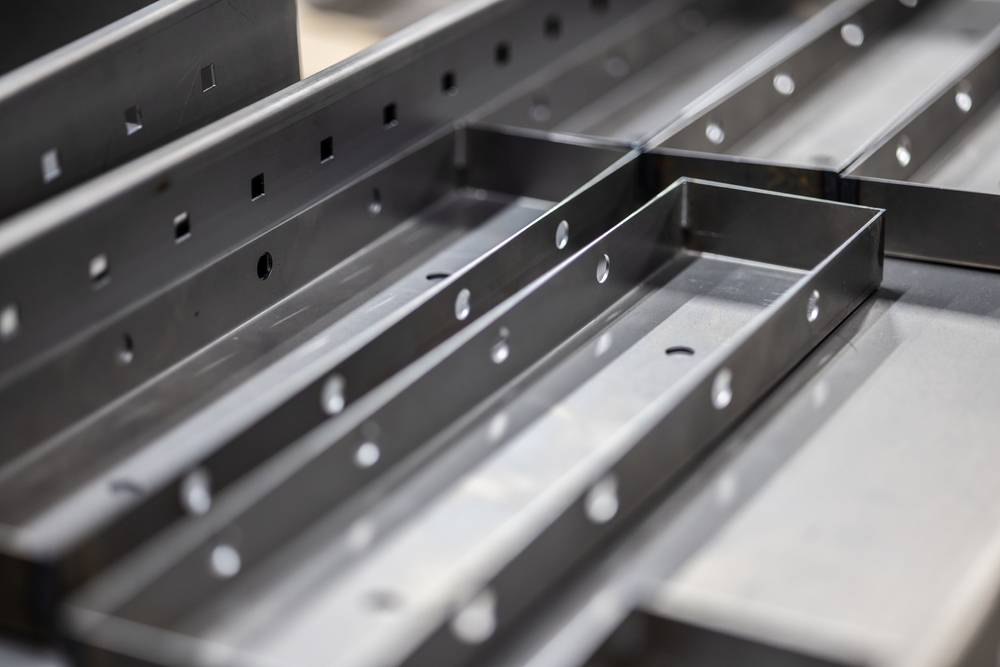
These operations allow manufacturers to create brackets, frames, enclosures, structural supports, and custom assemblies used throughout commercial and industrial applications.
Machining for Precision
Machining creates highly accurate features that cannot always be achieved through forming alone.
Common machining operations include:
-
Drilling
-
Milling
-
Tapping
-
Turning
-
Boring
Precision machining is especially valuable for replacement components, equipment repairs, and custom parts where exact dimensions are critical.
Welding and Assembly
Welding permanently joins fabricated components into a finished assembly.
Depending on the project, fabrication may include:
-
MIG welding
-
TIG welding
-
Stick welding
-
Structural welding
Proper weld quality contributes directly to product strength, safety, and long-term durability.
Complex projects often involve multiple fabricated pieces being assembled into complete equipment, platforms, supports, guards, or structural systems.
Finishing and Surface Protection
Finishing protects fabricated products while improving appearance and performance.
Depending on customer requirements, finishing may include:
-
Grinding
-
Deburring
-
Sanding
-
Painting
-
Powder coating
-
Protective coatings
The appropriate finish depends on the operating environment and intended application.
Outdoor equipment in Eastern Oregon may require additional corrosion protection due to seasonal weather exposure and irrigation conditions.
Quality Inspection
Quality inspection verifies that fabricated components meet design specifications before delivery.
Inspection may include:
-
Dimensional verification
-
Weld inspection
-
Surface finish evaluation
-
Assembly checks
-
Fit testing
Careful quality control helps ensure fabricated products perform as expected once installed.
Local Field Observations
Based on our experience serving businesses throughout Hermiston and surrounding communities, many fabrication projects involve replacing worn components that are no longer available from original manufacturers. Custom fabrication allows local operations to extend equipment life while reducing delays associated with sourcing hard-to-find parts.
Agricultural operations, food processing facilities, trucking companies, and industrial businesses throughout Boardman, Umatilla, Stanfield, and Pendleton frequently benefit from custom fabrication that keeps critical equipment operating efficiently.
How the Fabrication Process Benefits Local Businesses
A well-managed fabrication process offers several advantages for businesses throughout Eastern Oregon.
These include:
-
Improved equipment reliability
-
Custom solutions for unique applications
-
Better material utilization
-
Reduced downtime
-
Long-term durability
-
Consistent product quality
-
Faster replacement of specialized components
For industries where equipment availability directly affects productivity, quality fabrication can help minimize operational disruptions.
Warning Signs You May Need Custom Metal Fabrication
Several situations indicate it may be time to consider custom fabrication.
Watch for:
-
Equipment components that are no longer manufactured
-
Frequent failures of replacement parts
-
Structural damage to metal assemblies
-
Equipment modifications that require custom brackets or supports
-
Repeated welding repairs on the same component
-
Expansion projects requiring specialized metal structures
-
Production equipment that needs custom guards or platforms
When to Work with a Professional Fabricator
Professional fabrication becomes important whenever projects require structural integrity, precision measurements, specialized welding, or custom engineering considerations.
While basic metal repairs may be manageable for experienced personnel, complex fabrication projects often require specialized equipment, skilled welding, and quality inspection to ensure dependable performance.
Preventing Future Fabrication Problems
Routine maintenance can extend the life of fabricated metal products.
Helpful practices include:
-
Inspect equipment regularly for wear.
-
Address corrosion before it spreads.
-
Repair damaged components promptly.
-
Keep moving parts properly lubricated.
-
Replace worn components before failure causes additional damage.
-
Schedule inspections for heavily used equipment.
Preventive maintenance helps businesses avoid unexpected downtime and costly emergency repairs.
Expected Results from Professional Fabrication
Professional fabrication delivers products designed to match project specifications while supporting long-term performance.
Customers can generally expect:
-
Accurate dimensions
-
Quality welds
-
Proper material selection
-
Consistent workmanship
-
Finished products ready for installation
Project timelines vary depending on complexity, material availability, and production requirements.
Common Mistakes
Waiting too long to replace damaged components
Consequence: Small issues can become larger equipment failures.
Better approach: Address wear early before additional damage occurs.
Using generic replacement parts
Consequence: Poor fit can reduce performance and increase maintenance.
Better approach: Invest in properly fabricated custom components.
Choosing materials based only on cost
Consequence: Lower-cost materials may wear out faster.
Better approach: Select materials based on operating conditions and expected service life.
Common Local Scenario
A manufacturing operation in the Hermiston area experiences repeated failures of a specialized equipment bracket that is no longer available from the original manufacturer. Rather than replacing the entire machine, custom fabrication provides a replacement component built to match existing specifications, allowing operations to continue with minimal disruption.
Related Fabrication Services
Depending on project requirements, fabrication solutions may include:
-
Custom metal fabrication
-
Structural steel fabrication
-
Welding services
-
Repair fabrication
-
Equipment modifications
-
Industrial fabrication
-
Custom brackets and supports
-
Prototype fabrication
Comparing Your Options
| Option | Advantages | Considerations |
|---|---|---|
| Off-the-shelf parts | Faster availability | May not fit specialized equipment |
| Custom fabrication | Built to exact specifications | Requires production time |
| Temporary repairs | Lower immediate cost | May require future replacement |
| Complete replacement | New equipment | Higher overall investment |
Service Areas
We proudly serve customers throughout Hermiston, Umatilla, Pendleton, Boardman, Stanfield, and surrounding communities across Umatilla County and Eastern Oregon. We understand the fabrication needs of local agricultural, commercial, and industrial operations.
Cost of Ignoring Fabrication Issues
Delaying repairs or replacement of damaged fabricated components can increase equipment wear, create safety concerns, and contribute to unexpected downtime. Addressing problems early often helps businesses avoid more extensive repairs and production interruptions.
Frequently Asked Questions
How long does the metal fabrication process usually take?
The timeline depends on project complexity, material availability, and production requirements. Simple projects may move quickly, while large custom fabrications typically require additional planning, manufacturing, and quality inspection.
Can custom metal fabrication help businesses in Hermiston?
Yes. Custom fabrication provides components designed specifically for local agricultural, industrial, and commercial operations, allowing businesses in Hermiston to replace specialized parts and support equipment performance.
What industries commonly use metal fabrication in Umatilla County?
Agriculture, food processing, manufacturing, transportation, construction, and commercial businesses throughout Umatilla County regularly rely on fabricated metal products for equipment, facilities, and infrastructure.
What metals are commonly used for fabrication?
Carbon steel, stainless steel, aluminum, structural steel, and specialty alloys are commonly selected based on strength, corrosion resistance, weight, and application requirements.
Why is quality inspection important?
Quality inspection verifies that fabricated products meet required dimensions, welding standards, and customer specifications before delivery, helping reduce installation problems and improve long-term performance.
Can fabricated parts replace discontinued equipment components?
Yes. Custom fabrication is often an effective solution when replacement parts are no longer available from equipment manufacturers, allowing businesses to extend the useful life of valuable machinery.
Does Eastern Oregon’s environment affect fabricated products?
Yes. Outdoor equipment in Eastern Oregon may experience seasonal weather changes, dust, irrigation exposure, and temperature fluctuations that influence material selection and protective finishes.
Is custom fabrication more expensive than buying standard parts?
Not always. While custom fabrication may have a higher initial cost, properly designed components can reduce downtime, improve durability, and provide better long-term value for specialized applications.
Build the Right Solution from Start to Finish
Every fabrication project begins with understanding your goals and producing quality work that fits your operation. Whether you need custom parts, structural components, or complete fabrication services, we are here to help.
Let’s discuss your project and develop a custom fabrication solution that supports your business.
Categorised in: Metal Fabrication
This post was written by admin