
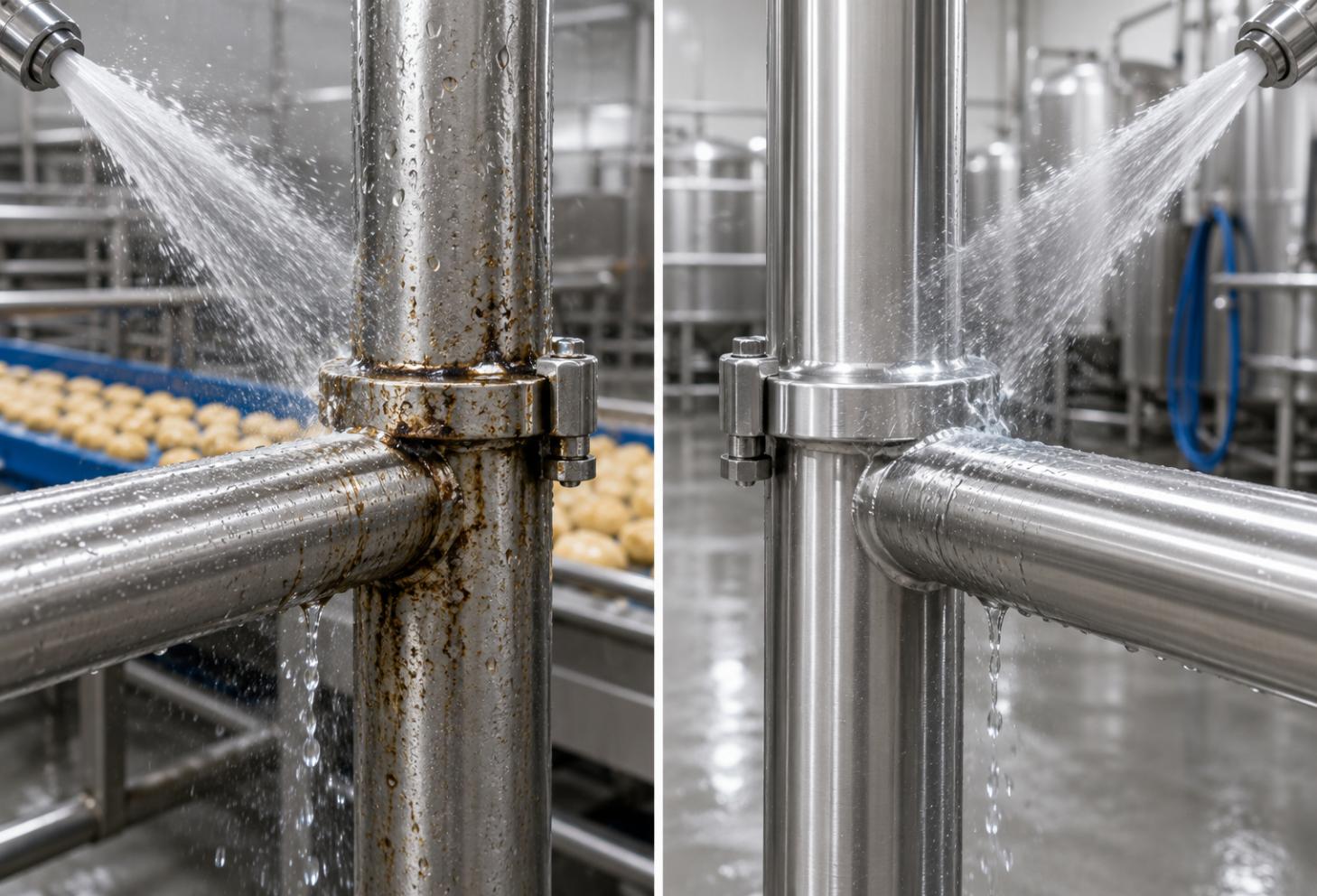
Minimizing Washdown Wear: Why 316 Stainless Steel is Worth the Upgrade Over 304 in Food Plants
July 20, 2026 4:09 pm Leave your thoughtsFood processing facilities throughout Hermiston depend on equipment that can withstand frequent washdowns without sacrificing performance or longevity. Choosing the right stainless steel grade plays a major role in reducing corrosion, limiting maintenance, and extending the life of fabrication projects exposed to moisture and cleaning chemicals.
Quick Answer
For food plants that experience frequent washdowns, 316 stainless steel generally provides better long-term corrosion resistance than 304 stainless steel. Its added molybdenum improves resistance to chlorides and harsh cleaning solutions commonly used in food production. While 316 usually costs more upfront, many facilities find the investment worthwhile because it can reduce repairs, downtime, and premature equipment replacement.
What Local Readers Should Know
-
Food processing facilities throughout Hermiston often perform multiple washdowns each day, exposing equipment to moisture and cleaning chemicals.
-
Plants serving agriculture across Umatilla County frequently rely on stainless steel fabrication for conveyors, platforms, guards, tanks, and processing equipment.
-
Chloride-based cleaners can gradually damage 304 stainless steel in demanding washdown environments.
-
Choosing the right material during fabrication is often less expensive than replacing corroded components later.
-
Facilities in nearby Boardman, Stanfield, and the Columbia Basin can benefit from selecting materials designed for their operating conditions.
Why This Matters Locally
Frequent sanitation is a fact of life for food processors throughout Eastern Oregon. Facilities supporting the region’s agricultural economy often operate on demanding production schedules that leave little room for unexpected maintenance. Whether a plant processes vegetables, dairy products, meat, or packaged foods, every hour of downtime can affect production targets.
Nw Metal Fabricators Inc understands that selecting materials is just as important as the quality of the fabrication itself. We help manufacturers choose stainless steel that matches their operating environment so fabricated components continue performing under demanding washdown conditions.
Local Data or Field Observations
Food manufacturing facilities must maintain strict sanitation standards, and many use chemical cleaning agents combined with high-pressure washdowns as part of routine operations. While every facility uses different cleaning procedures, our field observations show that fabrication exposed to repeated moisture, detergents, and chlorides experiences significantly different wear depending on the stainless steel grade selected.
Facilities operating year-round often see the greatest benefit from matching material selection to their cleaning practices instead of simply choosing the lowest initial material cost.
Local Impact
Manufacturers throughout Hermiston and neighboring communities rely on dependable equipment to maintain production schedules. Corrosion can create several operational challenges, including:
-
Increased maintenance labor
-
Unexpected shutdowns
-
More frequent replacement of fabricated parts
-
Difficult-to-clean surfaces
-
Reduced equipment lifespan
For facilities operating multiple production shifts, avoiding unnecessary maintenance interruptions helps improve overall efficiency.
Why 316 Stainless Steel Performs Better in Washdown Environments
316 stainless steel offers superior resistance to corrosion because it contains molybdenum, an alloying element that improves protection against chlorides and aggressive cleaning chemicals.
Compared with 304 stainless steel, 316 generally provides better protection when equipment is routinely exposed to:
-
Chlorinated sanitizers
-
Salt-containing food products
-
Acidic cleaning solutions
-
High humidity
-
Frequent pressure washing
This added protection helps fabricated components maintain their appearance and structural integrity for a longer period.
When 304 Stainless Steel May Still Be Appropriate
304 stainless steel remains an excellent material for many food industry applications.
Facilities with lighter cleaning schedules or limited exposure to chlorides may find that 304 performs well while reducing initial project costs.
The best choice depends on factors such as:
-
Cleaning chemicals
-
Washdown frequency
-
Product type
-
Moisture exposure
-
Equipment location
-
Expected service life
Evaluating these conditions before fabrication begins helps ensure the selected material fits the application.
Warning Signs Your Existing Equipment May Need Upgrading
Facilities should monitor stainless steel equipment for signs that corrosion is beginning to develop.
Common warning signs include:
-
Rust-colored staining
-
Pitting on stainless surfaces
-
Surface discoloration
-
Rough areas that become difficult to sanitize
-
Weld areas showing early corrosion
-
Recurring repairs on the same components
-
Equipment requiring increasingly frequent maintenance
These issues often indicate that the material may not be ideal for the operating environment.
When to Call a Professional
Professional evaluation becomes valuable when corrosion begins affecting food safety, production efficiency, or equipment reliability.
Plant personnel can monitor visible surface conditions during routine inspections, but fabrication specialists should evaluate:
-
Structural corrosion
-
Material selection
-
Weld condition
-
Replacement recommendations
-
Custom fabrication opportunities
Addressing these issues early often reduces future maintenance costs.
Common Causes of Washdown Wear
Several factors contribute to accelerated corrosion in food processing environments.
1. Chloride-Based Cleaning Chemicals
Many sanitizers contain chlorides that gradually attack stainless steel surfaces.
2. Constant Moisture
Equipment that rarely dries completely remains exposed to prolonged moisture.
3. Aggressive Cleaning Cycles
Repeated pressure washing removes contaminants but also subjects equipment to continual stress.
4. Food Residue
Certain food products contain salts or acids that increase corrosion potential.
5. Poor Material Selection
Using a stainless steel grade that is not suited for the environment often shortens equipment life.
Prevention and Maintenance
Preventing corrosion starts with selecting materials designed for the intended application.
Facilities can also reduce wear by:
-
Inspecting equipment regularly
-
Removing residue promptly
-
Following recommended cleaning chemical concentrations
-
Repairing damaged surfaces early
-
Replacing severely corroded components before failure
Working with experienced fabrication professionals during equipment upgrades helps avoid costly material mismatches.
Expected Results
Choosing the appropriate stainless steel grade can improve long-term equipment performance.
Depending on operating conditions, facilities may experience:
-
Longer equipment life
-
Reduced maintenance
-
Improved corrosion resistance
-
Fewer production interruptions
-
Better long-term value from fabricated components
Actual performance depends on cleaning practices, operating conditions, and maintenance routines.
Common Mistakes
Choosing the lowest material cost first
Consequence: Lower upfront costs may lead to higher replacement expenses.
Better approach: Evaluate lifetime operating costs rather than material price alone.
Ignoring cleaning chemical compatibility
Consequence: Unexpected corrosion may develop earlier than anticipated.
Better approach: Match stainless steel grades to actual cleaning procedures.
Replacing parts individually instead of evaluating the entire system
Consequence: Ongoing maintenance may continue without solving the underlying issue.
Better approach: Review fabrication needs as part of an overall maintenance strategy.
Common Local Scenario
A common situation in Hermiston-area food processing facilities involves replacing conveyor guards, work platforms, or machine frames after recurring corrosion develops around welds and high-moisture areas. During equipment upgrades, many facilities choose to evaluate whether switching to 316 stainless steel could provide better long-term performance based on their sanitation procedures.
Related Service Solutions
Custom stainless steel fabrication can help manufacturers improve durability while meeting operational requirements.
Depending on facility needs, fabrication services may include:
-
Custom equipment fabrication
-
Stainless steel platforms
-
Machine guards
-
Conveyor components
-
Sanitary fabrication
-
Replacement parts
-
Structural stainless fabrication
Comparing Your Options
| Option | Best For | Considerations |
|---|---|---|
| 304 Stainless Steel | Moderate washdown environments | Lower initial cost with good corrosion resistance |
| 316 Stainless Steel | Frequent washdowns and chloride exposure | Higher initial investment with improved corrosion resistance |
| Replacing Corroded Components Only | Short-term repairs | May not address recurring corrosion issues |
| Upgrading During Planned Maintenance | Long-term planning | Can reduce future downtime and replacement costs |
Service Areas
We proudly serve manufacturers in Hermiston, Umatilla County, Boardman, Stanfield, Pendleton, and surrounding communities across Eastern Oregon and the Columbia Basin. Our fabrication solutions are designed to support the unique needs of regional food processing and agricultural industries.
Cost of Ignoring the Issue
Waiting until corrosion causes equipment failure can lead to more expensive repairs, production interruptions, and unplanned replacement projects. Evaluating material choices before fabrication or during scheduled maintenance helps facilities make informed long-term decisions.
Frequently Asked Questions
Is 316 stainless steel always better than 304?
316 stainless steel is not always the best choice. It performs better in environments with frequent washdowns, chlorides, and aggressive cleaning chemicals, while 304 remains an excellent option for many less demanding applications.
Why do food plants in Hermiston often consider upgrading to 316?
Food processing facilities around Hermiston frequently perform intensive sanitation procedures. Equipment exposed to repeated washdowns may benefit from the improved corrosion resistance that 316 stainless steel offers.
Does 316 stainless steel eliminate corrosion completely?
No. Even 316 stainless steel requires proper maintenance and cleaning. While it generally resists corrosion better than 304, no material is completely immune under every operating condition.
Can existing equipment be upgraded with 316 components?
Yes. Many fabricated components can be replaced or redesigned using 316 stainless steel when equipment is being repaired, expanded, or modernized.
Is the higher cost of 316 worth it?
For facilities with demanding washdown environments, the higher initial investment may reduce maintenance, repairs, and replacement costs over the equipment’s service life.
Do food processors throughout Umatilla County use both grades?
Yes. Facilities across Umatilla County often use both 304 and 316 stainless steel depending on the application, exposure conditions, and operational requirements.
How do I know which material is right for my project?
Evaluating cleaning procedures, environmental exposure, and production requirements helps determine which stainless steel grade best fits the application.
Can custom fabrication be designed specifically for washdown environments?
Yes. Custom fabrication allows equipment to be designed around sanitation requirements, maintenance access, and the specific conditions found within each food processing facility.
Build Fabrication That Lasts in Demanding Food Processing Environments
Selecting the right stainless steel today can help reduce maintenance challenges tomorrow. We work with food manufacturers throughout Hermiston and the surrounding region to fabricate durable stainless steel solutions designed for demanding production environments.
Categorised in: Metal Fabrication Products
This post was written by admin