How to Choose the Right Metal Finish for Your Project
October 9, 2026 4:24 pm Leave your thoughtsMetal projects around Hermiston have to handle more than everyday wear. Outdoor exposure, dust, moisture, temperature changes, agricultural environments, and regular commercial or industrial use can all affect how a finished metal component looks and performs over time. Choosing the right finish is therefore part of planning the project, not simply a final cosmetic decision.
The right metal finish depends on the base metal, where the finished piece will be used, the appearance you want, and the type of exposure it will face. For projects in Hermiston, OR, it is especially useful to consider whether the metal will be indoors or outdoors, how frequently it will be handled, and whether corrosion resistance, durability, appearance, or ease of maintenance is the main priority.
What Local Readers Should Know
-
A metal finish should be selected according to the material and its actual operating environment, not appearance alone.
-
Outdoor projects around Hermiston may need greater protection from weather exposure, dust, moisture, and seasonal temperature changes than comparable indoor components.
-
Agricultural, commercial, and industrial applications throughout Umatilla County can expose fabricated metal to frequent use, dirt, equipment contact, and demanding working conditions.
-
Paint, powder coating, galvanizing, plating, and natural or mechanically finished surfaces offer different combinations of appearance and protection.
-
Discussing the intended use with a fabricator early can help ensure the finish is compatible with the design, fabrication process, and finished application.
Why Does the Right Metal Finish Matter in Hermiston?
The right metal finish matters in Hermiston because it can affect corrosion resistance, appearance, maintenance needs, and the service life of a fabricated component.
Eastern Oregon’s relatively dry environment does not eliminate corrosion concerns. Metal used outdoors can still encounter rain, irrigation moisture, condensation, dirt, chemicals, and changing temperatures. Projects associated with agriculture may face a different environment than architectural metalwork, shop equipment, or components used at commercial and industrial properties.
Location matters too. A component installed outdoors near a farm operation outside town may face different conditions than interior metalwork in a Hermiston business or equipment operating near the Interstate 82 and Interstate 84 transportation corridors.
NW Metal Fabricators Inc works with metal fabrication projects in the Hermiston area. When discussing a project with us, identifying how and where the finished piece will be used helps determine which finishing considerations should be part of the fabrication plan.
What Do Local Fabrication Conditions Tell Us About Metal Finishes?
Local fabrication conditions show that the best finish should be matched to the project’s exposure, function, material, and expected maintenance rather than selected from appearance alone.
For projects in the Columbia Basin, practical questions include whether the component will remain indoors, sit outside year-round, encounter irrigation or other moisture, operate around dust and debris, or experience frequent handling and equipment contact.
These are project-specific considerations rather than a claim that one finish is universally best. A finish that works well for an interior bracket may not be the preferred approach for an outdoor structural component, enclosure, railing, or piece of agricultural equipment.
How Does Your Metal Finish Affect the Finished Project?
Your metal finish affects the finished project by influencing its appearance, corrosion protection, resistance to everyday wear, and ongoing maintenance requirements.
For Hermiston property owners and area businesses, this can have practical consequences. A finish that is poorly suited to its environment may require more frequent attention or allow the underlying metal to become exposed as the surface deteriorates.
Appearance also matters for visible fabrication. Architectural components, railings, gates, business fixtures, and other exposed metalwork may need a consistent color or surface texture. Industrial components may place function and durability ahead of decorative appearance.
Defining those priorities before fabrication helps narrow the options.
What Are the Signs That a Metal Finish May Be Failing?
Signs that a metal finish may be failing include visible corrosion, peeling, cracking, fading, surface damage, or exposed base metal.
Watch for:
-
Rust beginning around scratches, joints, edges, or fasteners.
-
Paint or coating that is peeling, blistering, or flaking.
-
Chips that expose the underlying metal.
-
Uneven discoloration or noticeable surface deterioration.
-
Corrosion developing where moisture or debris regularly collects.
-
Wear in areas that experience repeated contact or abrasion.
-
Damage around welds, corners, mounting points, or frequently handled surfaces.
Finding these conditions early can make it easier to determine whether maintenance, refinishing, repair, or replacement is the appropriate next step.
When Should You Talk to a Metal Fabrication Professional?
You should talk to a metal fabrication professional when finish selection affects material compatibility, corrosion protection, fabrication requirements, or the long-term performance of the finished part.
Property owners can safely monitor accessible metal surfaces for scratches, coating damage, rust, and ordinary wear. Cleaning appropriate surfaces and keeping debris from accumulating can also help with routine maintenance.
Professional input becomes more useful when you are specifying a new fabricated component or deciding what to do with significantly deteriorated metal. A fabricator can consider the component’s material, design, installation environment, and intended function together instead of treating finishing as a separate decision.
For commercial, agricultural, and industrial projects around Hermiston and Umatilla County, that planning can be particularly valuable when downtime or premature deterioration would create operational problems.
What Common Conditions Affect Metal Finishes in the Hermiston Area?
Common conditions affecting metal finishes in the Hermiston area include outdoor exposure, moisture, dust and debris, repeated use, and the demands associated with agricultural and industrial environments.
Outdoor exposure: Exterior components encounter changing weather conditions throughout the year. A finish intended for indoor use may not provide the protection expected outdoors.
Moisture: Rain is not the only source of moisture. Irrigation, washing, condensation, and operational processes can expose metal surfaces to water.
Dust and debris: The Columbia Basin’s agricultural landscape and active work environments can mean dirt and debris accumulate on exposed components.
Abrasion and impact: Equipment, tools, vehicles, materials, and repeated handling can damage finishes in busy working environments.
Application-specific exposure: A metal component used near agricultural operations around Stanfield or Echo can face different conditions than architectural metalwork in town or industrial equipment near Boardman.
The best finish accounts for the environment where the metal will actually spend its working life.
How Can You Protect a Metal Finish and Extend Its Useful Life?
You can protect a metal finish by keeping surfaces reasonably clean, inspecting them for damage, addressing exposed metal promptly, and following maintenance practices appropriate for the finish.
In the Hermiston area, periodic inspection is particularly useful for exterior components and metal used in active agricultural, commercial, or industrial settings. Check areas where dirt and moisture can collect, along with edges, joints, fasteners, weld areas, and high-contact surfaces.
Avoid assuming every finish should be cleaned or repaired the same way. Abrasive cleaning methods or incompatible chemicals can damage some surfaces.
DIY maintenance should generally stop when corrosion is extensive, structural condition is uncertain, coatings are failing across large areas, or the component requires fabrication or welding repairs.
What Results Should You Expect From the Right Metal Finish?
The right metal finish should provide a practical balance of appearance, protection, durability, and maintenance requirements for the component’s intended environment.
That does not mean every finish will remain unchanged indefinitely. Outdoor metalwork and heavily used equipment will still experience normal wear. Instead, proper finish selection gives the fabricated component a surface treatment suited to the conditions it is expected to encounter.
For a visible project, success might mean a consistent appearance that complements the property. For working equipment, it may mean prioritizing practical surface protection and easier maintenance.
What Mistakes Should You Avoid When Choosing a Metal Finish?
The most common metal finish mistakes come from choosing primarily by appearance, ignoring the operating environment, or waiting until fabrication is nearly complete to discuss finishing.
Mistake: Choosing only by color or appearance.
Consequence: The finish may look right but perform poorly in the actual environment.
Better approach: Consider exposure and function before narrowing aesthetic choices.
Mistake: Treating indoor and outdoor applications the same.
Consequence: An exterior component may not receive the level of protection appropriate for its use.
Better approach: Tell your fabricator exactly where the component will be installed.
Mistake: Ignoring abrasion and contact.
Consequence: Frequently handled or impacted surfaces can show wear sooner than expected.
Better approach: Discuss how the component will actually be used.
Mistake: Leaving finish decisions until the end.
Consequence: Some options may affect fabrication planning, preparation, dimensions, or project sequencing.
Better approach: Include finishing requirements in the initial project conversation.
What Is a Common Metal Finish Scenario in Eastern Oregon?
A common Eastern Oregon scenario is a business or agricultural operator needing a fabricated steel component that will spend much of its life outdoors or in an active working environment.
The owner may initially focus on dimensions, strength, and fit. Finishing can seem secondary until questions arise about moisture, dirt, abrasion, maintenance, and long-term appearance.
In this type of situation, the better approach is to discuss the environment during the design and fabrication stage. That allows material, fabrication, and finishing considerations to support the same project goals.
What Metal Fabrication Services Can Help With Finish Planning?
Metal fabrication services can help with finish planning by considering surface requirements alongside the component’s material, design, fabrication, and intended use.
We can discuss how the finished component will be used and which factors should guide the finishing decision. That may include whether the project is decorative or functional, indoors or outdoors, frequently handled or relatively protected.
For custom fabrication around Hermiston, considering these requirements early can create a clearer path from the initial project concept to the completed component.
How Do Common Metal Finish Options Compare?
Common metal finish options differ mainly in appearance, corrosion protection, durability, cost considerations, and compatibility with the base material and intended environment.
Painted finishes can provide color and surface protection when the coating system is appropriate for the material and environment.
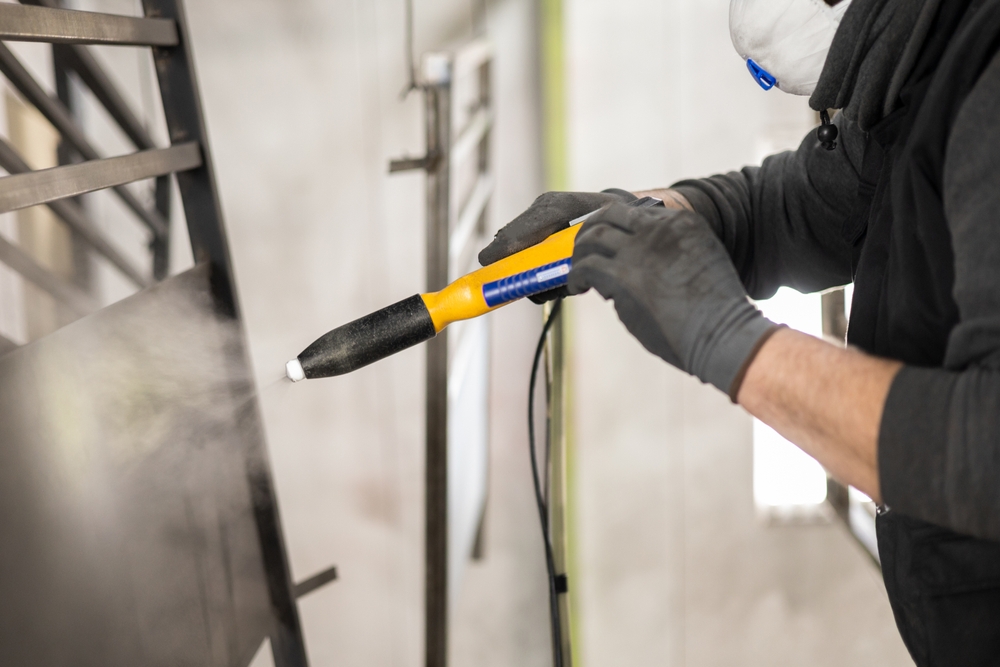
Powder coating can provide a uniform decorative and protective surface for suitable fabricated parts.
Galvanized finishes are commonly considered when corrosion protection for steel is an important project requirement.
Plated finishes may be used for specific metals and applications where particular surface properties or appearances are needed.
Natural or mechanically finished metal may be appropriate when the material itself provides the desired appearance and the application does not require an added coating.
There is no single winner for every Hermiston project. The best option is the one that matches the base metal, environment, function, desired appearance, and maintenance expectations.
What Areas Can Consider These Metal Finishing Principles?
These metal finishing principles apply to projects throughout Hermiston and surrounding communities in Umatilla County and the broader Columbia Basin.
Property owners and businesses in areas such as Stanfield, Echo, Umatilla, and nearby Eastern Oregon communities can use the same basic process: identify the material, environment, exposure, function, and maintenance expectations before settling on a finish.
What Can Happen If You Ignore Finish Requirements?
Ignoring finish requirements can lead to premature surface deterioration, additional maintenance, poor appearance, and corrosion where the underlying metal becomes exposed.
For a working component, deterioration can also create inconvenient repair timing or operational disruption. In agricultural and commercial settings around Hermiston, discovering that a component needs attention during a busy operating period can be particularly inconvenient.
Choosing deliberately at the beginning is generally more practical than treating surface protection as an afterthought.
FAQ
What is the best metal finish for outdoor projects in Hermiston, OR?
The best metal finish for an outdoor project in Hermiston depends on the base metal, exposure, desired appearance, and expected wear. Moisture, dust, sunlight, temperature changes, and physical contact should all be considered. Rather than selecting by appearance alone, match the finish to the component’s actual installation environment.
Does Eastern Oregon’s dry climate mean steel does not need protection?
No. A relatively dry regional climate does not mean exposed steel is immune to corrosion. Rain, irrigation, washing, condensation, and other moisture sources can still reach metal surfaces. Outdoor steel projects in Umatilla County should be evaluated according to their specific exposure rather than relying on the regional climate alone.
Is powder coating a good option for metal fabrication in Hermiston?
Powder coating can be an option for suitable fabricated metal components when its characteristics match the project’s material, use, appearance, and exposure requirements. Whether it is the right choice for a particular Hermiston project should be determined by considering where the component will be installed and how it will be used.
Should agricultural metal projects use a different finish?
Agricultural metal projects may require different finishing considerations because equipment and fabricated components can encounter dirt, moisture, abrasion, frequent handling, and demanding working conditions. For projects around Hermiston, Stanfield, Echo, and surrounding agricultural areas, the actual operating environment should guide finish selection.
Should I choose the metal or the finish first?
The base material and finish should be considered together because material selection, fabrication requirements, environment, and surface treatment can affect one another. Discussing both early in a Hermiston fabrication project can help avoid selecting a finish that does not suit the metal or intended application.
Can scratched metal coatings be ignored?
Small scratches should still be monitored because damage that exposes the underlying metal may reduce the protection provided by the coating. This is especially relevant for exterior or frequently used components. If corrosion develops or damage becomes widespread, professional evaluation can help determine the appropriate next step.
How often should outdoor metalwork in Umatilla County be inspected?
Outdoor metalwork should be inspected periodically and after conditions or activities that could cause damage, but there is no single schedule appropriate for every component. Exposure, finish type, accessibility, and frequency of use all matter. Look for scratches, peeling, corrosion, impact damage, and areas where moisture or debris collects.
Can I select a finish based on color alone?
No. Color can be an important design consideration, but it should not be the only factor. A finish also needs to suit the metal, environment, level of wear, and maintenance expectations. For local projects, practical exposure conditions should be evaluated before the final appearance is selected.
Choose a Finish That Fits Your Eastern Oregon Project
The best metal finish is one selected with the entire project in mind, including the material, environment, function, appearance, and expected maintenance. We can help you consider those factors as part of planning a fabrication project for Hermiston and the surrounding area.
Build Your Project With Its Long-Term Environment in Mind
Thoughtful material and finish planning can help create fabricated metalwork that is better suited to its intended use and local conditions.
Categorised in: Powder Coating, Sandblasting
This post was written by admin