
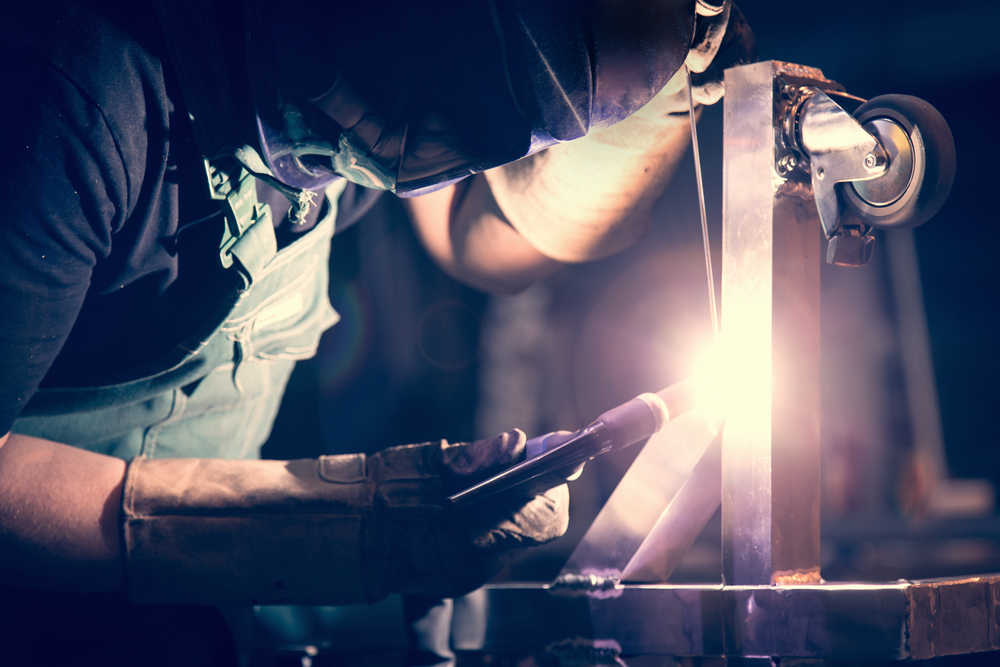
Welding Aluminum for Lightweight Structural Applications
February 8, 2026 8:42 pm Leave your thoughtsThe increasing demand for strong yet lightweight materials across industries such as aerospace, automotive, construction, and marine has driven a surge in the use of aluminum. Its low density, corrosion resistance, and good mechanical properties make it a top choice for structural applications where reducing weight is critical. However, aluminum welding presents unique challenges compared to welding steel. Understanding the material’s properties and the correct welding techniques is essential for achieving reliable, high-performance results in lightweight structural welding projects.
Aluminum’s popularity in structural applications is not only due to its weight advantage but also its recyclability, aesthetic appeal, and durability. From aircraft frames to vehicle chassis and building facades, aluminum’s adaptability is unmatched. However, its high thermal conductivity and oxide layer require specialized attention when welding, making expertise in aluminum welding a valuable asset for engineers and fabricators.
Material Properties and Challenges in Aluminum Welding
Welding aluminum requires a deep understanding of its physical and chemical properties. Unlike steel, aluminum forms a tough oxide layer on its surface almost instantly when exposed to air. This oxide has a much higher melting point than the aluminum underneath, making it difficult for the welding arc to penetrate without proper preparation. Surface cleaning and the use of alternating current (AC) in gas tungsten arc welding (GTAW or TIG) help break through this oxide layer.
Another challenge is aluminum’s high thermal conductivity, which causes heat to dissipate quickly from the weld zone. This can make it difficult to maintain a stable weld pool and may require higher heat inputs than are typical for steel. At the same time, aluminum has a relatively low melting point, which can lead to warping, burn-through, or distortion if not properly managed. These factors demand precise control over heat input and weld technique.
Aluminum’s coefficient of thermal expansion is also higher than that of steel, which can lead to more significant dimensional changes during welding and cooling. Proper fixture design and pre-weld planning are essential to compensate for these changes and prevent misalignment in lightweight structural welding applications.
Common Techniques Used in Aluminum Welding
Several welding methods are suitable for aluminum, but the most commonly used in structural applications are Gas Tungsten Arc Welding (GTAW or TIG) and Gas Metal Arc Welding (GMAW or MIG). Both methods offer specific advantages depending on the thickness of the material, the desired weld quality, and the project’s production requirements.
TIG welding is preferred for thin-gauge aluminum and applications requiring high precision and clean aesthetics. It provides excellent control over the weld pool and is ideal for tasks such as aerospace components or architectural elements. The use of an AC power source helps remove the aluminum oxide layer, allowing for a cleaner weld.
MIG welding, on the other hand, is more suited for thicker materials and projects demanding higher productivity. It uses a continuously fed wire electrode, allowing for faster weld speeds and more efficient deposition. When using MIG for aluminum, selecting the appropriate wire alloy, shielding gas (typically pure argon or argon-helium mixes), and ensuring proper machine settings are critical for success.
Advanced processes such as Friction Stir Welding (FSW) are also gaining popularity, particularly in high-precision structural applications like railcars and aircraft. This solid-state welding method avoids melting the aluminum entirely, instead using mechanical stirring to join the material. FSW results in a strong, defect-free weld with excellent mechanical properties and minimal distortion.
Applications and Advantages in Lightweight Structural Welding
Aluminum welding plays a pivotal role in a variety of lightweight structural applications. In the aerospace sector, reducing weight without compromising strength is paramount. Aluminum alloys such as 6061, 7075, and 2024 are commonly used in aircraft fuselages, wings, and internal frameworks due to their high strength-to-weight ratio and corrosion resistance. Welding techniques must ensure minimal heat distortion while preserving mechanical properties.
In automotive manufacturing, aluminum welding contributes to lighter vehicles, improved fuel efficiency, and reduced emissions. Vehicle frames, hoods, and body panels often incorporate aluminum components joined using robotic MIG welding for speed and consistency. Electric vehicle manufacturers especially benefit from the lightweight properties of aluminum, which help counterbalance the heavy battery packs.
The marine industry also takes advantage of aluminum’s corrosion resistance, using it for hulls, decks, and superstructures. Lightweight aluminum structures allow boats and ships to maintain buoyancy and speed while withstanding harsh saltwater environments. Structural welding techniques in this field must account for exposure to varying loads and conditions.
Construction is another area where aluminum welding is increasingly important. From high-rise curtain walls to structural bridges and platforms, aluminum offers an attractive combination of strength and lightweight form. Welded aluminum assemblies can be prefabricated off-site and easily transported and installed, speeding up construction timelines and reducing labor costs.
Best Practices for High-Quality Aluminum Welds
Achieving high-quality aluminum welds in structural applications requires thorough preparation, careful equipment selection, and ongoing quality control. Surface preparation is the first critical step. Removing contaminants such as oil, grease, and oxide layers ensures proper fusion and minimizes the risk of weld defects. Mechanical cleaning with stainless steel brushes and chemical etching with solvents are standard practices.
Proper joint design and fit-up are also essential. Aluminum does not bridge gaps as readily as steel, so precise alignment and joint tolerance are necessary. Using backing bars or chill blocks can help dissipate heat and stabilize the weld pool, especially for thinner sections.
Shielding gas selection is another key consideration. Pure argon is most commonly used, but helium mixtures can increase heat input for thicker sections or when deeper penetration is required. Choosing the right filler material is also critical for ensuring compatibility with the base metal and avoiding issues such as cracking or corrosion.
Welding parameters, including voltage, amperage, travel speed, and wire feed rate, should be optimized based on the specific aluminum alloy and joint configuration. Preheating may be necessary for thicker materials to reduce thermal gradients and minimize stress. Post-weld inspection using techniques such as dye penetrant testing or X-ray analysis can help verify weld integrity and identify defects that might compromise structural performance.
Training and certification of welding personnel further contribute to successful outcomes. Given the complexity of aluminum welding, skilled welders with experience in lightweight structural welding are essential for maintaining quality standards and ensuring safety in demanding applications.
Conclusion
Welding aluminum for lightweight structural applications demands a blend of technical expertise, meticulous preparation, and a clear understanding of the material’s unique behavior. With its excellent strength-to-weight ratio, corrosion resistance, and adaptability, aluminum continues to reshape industries focused on efficiency, performance, and sustainability. However, mastering the challenges associated with aluminum welding is essential for unlocking its full potential in structural design.
From aircraft to automobiles, ships to skyscrapers, aluminum plays a foundational role in building the next generation of lightweight structures. As welding technologies evolve and materials science advances, professionals who can confidently and competently weld aluminum will remain in high demand. By following best practices, selecting the right techniques, and prioritizing quality, fabricators and engineers can ensure strong, durable, and efficient structures that meet the demands of modern engineering.
Need Steel Fabricators in Hermiston, OR?
NW Metal Fabricators, Inc. is a family-owned business that has been servicing customers in Hermiston, Oregon since 1986. We have more than 100 years of experience in the food-processing industry and specialize in the custom production of storage bins, conveyors, catwalks, handrails, gates, storage tanks, water heater tanks, sanitary piping, steam piping, and trailer truck hitches. NW Metal Fabricators, Inc. is an accredited member of the local Chamber of Commerce. We are a dedicated business where quality always comes first. Our customers know that they can count on us to make sure that their products are hand-crafted to meet their specifications. Contact us today to learn more about what we can do for you!
Categorised in: Welding
This post was written by admin